
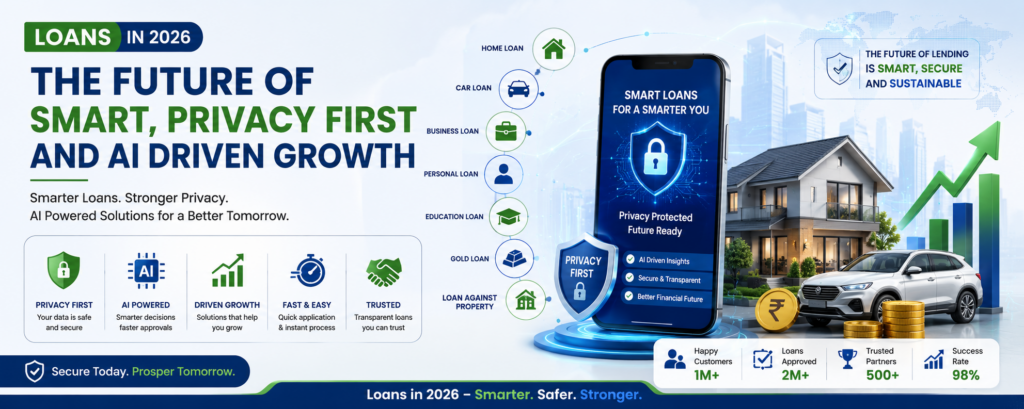
Loans in 2026: Everything You Need to Know Before Borrowing
The lending industry has undergone a remarkable transformation over the past few years, and 2026 has become a defining year for borrowers and financial institutions alike. From AI-powered loan approvals to paperless documentation, borrowers now have access to faster, smarter, and more personalized financing options than ever before. Whether you’re planning to purchase a home, finance higher education, expand your business, buy a vehicle, or manage unexpected expenses, understanding how loans work in 2026 can help you make informed financial decisions.
Unlike traditional borrowing methods that relied heavily on paperwork and lengthy approval timelines, modern lending combines advanced technology, digital verification, alternative credit assessments, and enhanced customer experience. This evolution benefits both lenders and borrowers by improving transparency, reducing processing times, and making financial products more accessible.
In this comprehensive guide, we’ll explore the latest loan trends, types of loans available, technological innovations, eligibility requirements, interest rate factors, and practical borrowing tips to help you navigate the lending landscape confidently.
Understanding Loans in 2026
A loan is a financial agreement where a lender provides funds to a borrower with the expectation that the amount will be repaid over a specified period, usually along with interest. While this basic concept remains unchanged, the borrowing experience has evolved dramatically.
In 2026, digital ecosystems dominate the lending industry. Borrowers can compare multiple lenders online, upload documents electronically, complete identity verification remotely, receive approvals within minutes, and track repayments through mobile applications.
Financial institutions are increasingly using intelligent systems that evaluate income stability, repayment history, spending behavior, banking patterns, and other financial indicators to assess creditworthiness more accurately.
This modern approach has significantly reduced approval times while making lending more secure and customer-centric.
Why Loans Continue to Play an Important Role
Loans remain one of the most effective financial tools for individuals and businesses. Instead of waiting years to accumulate savings, borrowers can access immediate funds to achieve important life goals.
Some common reasons people apply for loans include:
- Purchasing a home
- Buying a car or commercial vehicle
- Funding higher education
- Managing medical emergencies
- Expanding a business
- Renovating a property
- Consolidating existing debt
- Meeting short-term financial requirements
When used responsibly, loans help improve financial flexibility without disrupting long-term financial planning.
Major Loan Trends Shaping 2026
1. AI-Powered Loan Approvals
Artificial Intelligence has transformed lending decisions. Instead of relying solely on traditional credit scores, lenders now analyze broader financial behavior to evaluate applicants more fairly.
AI systems can review thousands of data points within seconds, resulting in faster approvals and reduced human bias.
Benefits include:
- Instant eligibility checks
- Faster processing
- Better fraud detection
- Improved customer experience
- More personalized loan offers
2. Completely Digital Loan Processing
Paperless lending has become the standard.
Most lenders now allow applicants to:
- Apply online
- Upload digital documents
- Complete eKYC verification
- Sign agreements electronically
- Receive digital sanction letters
- Monitor repayments through apps
This convenience saves time while improving transparency throughout the borrowing process.
3. Personalized Loan Offers
Modern lenders use customer data to customize financial products.
Instead of offering identical interest rates to every borrower, financial institutions now provide personalized offers based on:
- Income
- Employment stability
- Credit profile
- Existing liabilities
- Banking history
- Repayment capacity
This allows financially responsible borrowers to receive more competitive loan terms.
4. Stronger Fraud Prevention
Cybersecurity has become a top priority in digital lending.
Modern financial institutions use:
- Biometric authentication
- Facial recognition
- Multi-factor authentication
- Encrypted transactions
- Real-time fraud monitoring
These technologies help protect borrowers from identity theft and financial fraud.
5. Sustainable and Green Financing
Environmental awareness continues influencing lending practices.
Many financial institutions now offer financing for:
- Solar energy systems
- Electric vehicles
- Energy-efficient homes
- Eco-friendly business projects
Green financing encourages environmentally responsible investments while supporting long-term sustainability.
Different Types of Loans Available in 2026
Home Loan
Home loans remain among the most popular financial products.
They help borrowers purchase residential properties while allowing repayment over extended periods.
Benefits include:
- Long repayment tenure
- Competitive interest rates
- Higher borrowing limits
- Flexible repayment options
Personal Loan
Personal loans are unsecured loans designed to meet various financial needs.
Common uses include:
- Medical expenses
- Weddings
- Travel
- Home renovation
- Emergency expenses
- Debt consolidation
Since collateral isn’t required, approval depends primarily on the applicant’s financial profile.
Car Loan
Vehicle financing remains an attractive option for individuals purchasing new or used vehicles.
Modern lenders offer:
- Flexible EMIs
- Competitive interest rates
- Quick approvals
- High financing amounts
Education Loan
Education loans continue helping students pursue higher education domestically and internationally.
Coverage often includes:
- Tuition fees
- Hostel expenses
- Books
- Equipment
- Living costs
Flexible repayment options make education more accessible for deserving students.
Business Loan
Businesses increasingly rely on loans for:
- Expansion
- Inventory purchases
- Equipment financing
- Working capital
- Technology upgrades
- Hiring employees
Digital lending has made business financing significantly faster than traditional banking processes.
Loan Against Property (LAP)
Property owners can leverage residential or commercial property to obtain financing.
Loan Against Property offers:
- Lower interest rates
- Higher loan amounts
- Longer repayment periods
- Flexible usage of funds
Gold Loan
Gold loans remain a preferred financing option due to their quick processing and secured nature.
Advantages include:
- Minimal documentation
- Fast approval
- Lower interest rates compared to unsecured loans
- Short processing time
Factors That Influence Loan Approval
While technology has simplified lending, approval still depends on several important factors.
Credit Score
A healthy credit score demonstrates responsible borrowing behavior and improves approval chances.
Income Stability
Consistent income reassures lenders that borrowers can repay loans comfortably.
Employment History
Stable employment indicates financial reliability.
Existing Financial Obligations
Lenders evaluate current loans, credit card balances, and repayment commitments before approving new credit.
Debt-to-Income Ratio
Lower debt relative to income generally improves loan eligibility.
Documentation Accuracy
Accurate information speeds up approval while reducing verification delays.
Interest Rates in 2026
Interest rates continue varying based on several factors.
These include:
- Credit profile
- Loan amount
- Repayment period
- Employment type
- Financial institution
- Economic conditions
- Lending policies
Borrowers should always compare multiple lenders before making a final decision.
Even a small difference in interest rates can significantly impact the total repayment amount.
Benefits of Digital Lending
Digital lending offers numerous advantages over conventional borrowing.
These include:
- Faster approvals
- Less paperwork
- Transparent processes
- Online tracking
- Improved customer service
- Convenient repayments
- Secure documentation
- Better loan comparison tools
Borrowers now have greater control over their financing journey.
Common Mistakes Borrowers Should Avoid
Many borrowers make avoidable mistakes that increase financial stress.
Some common errors include:
Borrowing More Than Necessary
Only borrow the amount required.
Higher loan amounts increase both interest costs and monthly repayments.
Ignoring the Fine Print
Always review:
- Processing fees
- Prepayment charges
- Late payment penalties
- Foreclosure conditions
- Interest calculation methods
Missing EMI Payments
Delayed repayments negatively affect credit scores and may attract penalties.
Setting automatic payments helps maintain repayment discipline.
Applying to Multiple Lenders Simultaneously
Numerous loan applications within a short period may affect your credit profile.
Compare lenders carefully before applying.
How to Improve Loan Eligibility
Improving eligibility is often easier than people expect.
Helpful strategies include:
- Maintain a strong credit score.
- Pay existing EMIs on time.
- Reduce outstanding debts.
- Keep financial records organized.
- Avoid frequent loan applications.
- Maintain stable employment.
- File income tax returns regularly.
- Build healthy banking relationships.
These practices improve overall financial credibility.
Technology Reshaping the Lending Industry
Innovation continues transforming financial services.
Some emerging technologies include:
Artificial Intelligence
Supports smarter risk assessment and faster approvals.
Machine Learning
Improves lending models by identifying repayment patterns.
Blockchain
Enhances security, transparency, and document verification.
Cloud Computing
Enables lenders to process applications more efficiently.
Digital Identity Verification
Reduces fraud while accelerating customer onboarding.
These technologies are expected to become even more influential in the coming years.
Responsible Borrowing in 2026
Borrowing responsibly remains the key to long-term financial health.
Before applying for any loan, borrowers should ask themselves:
- Is the loan genuinely necessary?
- Can monthly repayments fit comfortably within my budget?
- Have I compared multiple lenders?
- Do I understand all charges?
- Do I have an emergency savings fund?
Thoughtful financial planning helps prevent unnecessary debt.
The Future of Loans Beyond 2026
The lending industry will continue evolving as technology advances.
Future developments may include:
- Instant AI-based lending decisions
- Voice-enabled loan applications
- Hyper-personalized financial products
- Advanced fraud prevention systems
- Embedded finance within everyday applications
- Faster cross-border lending
- Greater financial inclusion through digital platforms
These innovations aim to make borrowing simpler, safer, and more accessible while maintaining strong regulatory standards.
Final Thoughts
Loans in 2026 are no longer just financial products—they are intelligent financial solutions designed around speed, convenience, personalization, and security. The combination of digital technology, artificial intelligence, automated verification, and customer-focused services has fundamentally changed how people borrow money.
However, while obtaining a loan has become easier, responsible borrowing remains just as important. Borrowers should evaluate their financial needs carefully, compare available options, understand every term and condition, and choose repayment plans that align with their income and long-term goals.
Whether you’re seeking a home loan, personal loan, education loan, business loan, vehicle loan, gold loan, or loan against property, success begins with informed decision-making. By maintaining a healthy credit profile, borrowing only what you need, and making timely repayments, you can use loans as a powerful tool to achieve financial stability and long-term growth.
As the financial ecosystem continues to evolve, borrowers who stay informed about lending trends, digital innovations, and responsible financial practices will be best positioned to take advantage of the opportunities that 2026 and the years ahead have to offer.